Keynote speakers
16th Meeting of the IOBC-WPRS Working Group "INTEGRATED CONTROL IN PROTECTED CROPS, MEDITERRANEAN CLIMATE"
2-5 September 2025, Podgorica, Montenegro
KEYNOTE SPEAKERS:
Rob Tanner (European and Mediterranean Plant Protection Organization)

Dr. Rob Tanner is a Senior Scientific officer at the European and Mediterranean Plant Protection Organization in Pairs, France, where he is responsible for the work on biological control agents. Rob works with the EPPO/IOBC Panel on Biological Control Agents to develop regional Standards on the regulating the introduction and promote the safe use of biological control agents. Previously, Rob worked as an applied scientist at CABI (UK) developing and implementing biological control programmes against invasive alien plants in various regions of the world. He worked as part of the team that released the Psyllid Aphalara itadori against Japanese knotweed (Reynoutria japonica) in the UK, and the first release of a fungal classical biological control in Europe against an invasive plant – Puccinia komarovii var. glanduliferae against Impatiens glandulifera.
Title: Challenges and opportunities of utilization of biological control against regulated pests of protected crops in the EPPO region.
Contents: Biological control is a pest control method that can offer an environmentally safer alternative to chemical pesticides. Its proven safety record allows its utilization against indigenous and non-indigenous within protected conditions or in open field cropping systems. This presentation will discuss the challenges for the uptake of biological control for regulated pests of protected crops and aims to provides recommendations to increase the safe use of biological control in the EPPO region.
Željko Tomanović (University of Belgrade and Serbian Academy of Science)

Over 30 years of educational, scientific and professional activity at the Faculty of Biology, University of Belgrade, he supervised over 20 PhD theses in Serbia, Spain, Slovenia and Bosnia & Herzegovina. Reach experience in basic research (diversity, taxonomy, phylogenetics and ecology of insect parasitoids) and applied research (parasitoid–host interactions, biological control and monitoring of pests and invasive species). Focus on integrating morphological, ecological and molecular methods to study species complexes and cryptic speciation in parasitoids. Published over 140 peer-reviewed articles in international journals. Member of the editorial board of 5 scientific journals and reviewer for over 50 international journals. Member of the scientific committee IOBC – Ecology of Aphidophaga. Invited speaker at several universities in China, Austria, Slovenia and Spain. Member of the Serbian Academy of Sciences, Entomological Society of America, International Society of Hymenopterists, Serbian Entomological Society (2007-2012, President). Awards for best technological innovation in biocontrol 2008 and 2009. Coordinator of international projects, among which SEE ERA NET, FP6, SCOPES (Swiss National Foundation), and team leader in BIOCOMES (FP7) (2014-2017) and ECOSTACK (Horizon 2020) (2018-2024).
Title: Aphid parasitoids taxonomy and new resources for biological control.
Contents: Many species of aphid parasitoids are important biological agents and economically important natural enemies of aphids in various agroecosystems. Some of them are already commercially produced and available on the market. Due to frequent cases of cryptic speciation and lack of taxonomic expertise, our knowledge of many economically important species of aphid parasitoids is not satisfactory. However, an integrative approach combining morphological traits, host range patterns and molecular markers lead to increase our basic taxonomic knowledge, which should result in more commercially available aphid parasitoid species on the market and more diverse products for biological control in general and in the Mediterranean region.
Alberto Urbaneja (Instituto Valenciano de Investigaciones Agrarias (IVIA), Spain)
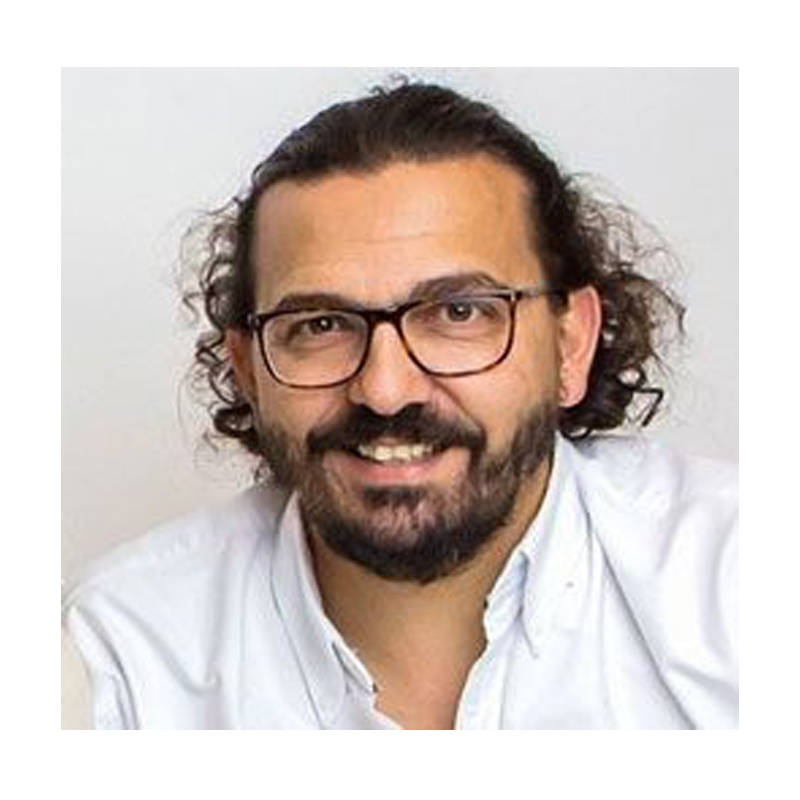
Research Professor of Entomology at Instituto Valenciano de Investigaciones Agrarias (IVIA), Spain. Throughout his career, he has addressed numerous key pests in horticultural crops, consistently focusing on developing pest management programs prioritising biological control. His research explores innovative strategies to enhance plant resilience by leveraging natural ecological interactions. He has authored over 400 publications, including 176 in SCI-indexed journals, and has led 21 out of 42 research projects in which he has been involved. His commitment to knowledge transfer is reflected in numerous outreach activities and the 31 research contracts he has secured with agricultural companies. He has also fostered collaborations with public institutions to develop practical agricultural applications. In addition to his research, Alberto has supervised 18 doctoral theses, mentored postgraduate students and postdoctoral fellows, and hosted over 50 research internships. He has held editorial roles in scientific journals and contributed to scientific committees, evaluation commissions, and consultancy work for international organizations.
Title: Holistic and sustainable approaches for pest and stress management in horticultural crops.
Contents: A multifaceted approach to improving crop health and sustainability will be highlighted in this lecture. Specifically, the role of companion plants will be discussed in increasing functional biodiversity, fostering populations of natural enemies, and contributing to overall ecosystem stability. Findings will also be presented on the application of beneficial fungi, such as Trichoderma spp., which enhance plant resistance to pests and abiotic stressors. Finally, the use of defence elicitors will be addressed, as well as their role in activating plant immune responses and reducing susceptibility to herbivores and pathogens while minimizing reliance on synthetic pesticides.